What are the advantages of hydrogen production switching power supplies?
2026.01.12
I. Core Technological Advantages of Hydrogen Production Power Supplies
1>High-Frequency Switching Technology: An Efficiency Revolution
Hydrogen production power supplies utilize IGBTs or third-generation semiconductor SiC power devices, with operating frequencies reaching 20-50kHz, representing a qualitative leap compared to traditional solutions. High-frequency operation brings three major breakthroughs:
Conversion efficiency up to 99%: The silicon carbide (SiC) solution further improves efficiency by 1-2 percentage points compared to traditional IGBTs, significantly reducing energy costs.
Fast Dynamic Response: Power regulation response time ≤0.1 seconds, enabling real-time tracking of renewable energy fluctuations and achieving "flexible hydrogen production."
Low Ripple Output: Extremely low output voltage ripple, effectively protecting the electrolyzer and extending equipment lifespan.
2>Modular Design: Smarter Operation and Maintenance
Hot-swappable Maintenance: Each power module operates independently; faulty modules can be replaced online, minimizing downtime.
Flexible Expansion: Power modules can be flexibly added or removed according to hydrogen production needs, achieving "on-demand configuration."
Remote Intelligent Operation and Maintenance: Built-in big data recording function, real-time monitoring of current, voltage, and temperature curves, supporting remote diagnostics via cloud platform.
3>. Superior Power Quality: Grid-Friendly Design
Compared to traditional thyristor solutions, IGBT hydrogen production power supplies offer significant advantages:
Harmonic Content <3%: No need for additional filtering devices, reducing supporting costs
Power Factor >99%: Reduces reactive power losses and provides reactive power support capability
Low Switching Losses: Soft-switching technology reduces electromagnetic interference and improves system reliability
II. Economic and Environmental Adaptability Advantages
1,Overall Cost Advantage
Although the initial purchase cost of IGBT hydrogen production power supplies is higher, the total life-cycle cost is more competitive:
Electricity Cost Savings: Efficiency improvement of 1-2 percentage points can save millions of yuan in electricity costs annually in a hydrogen production base with tens of thousands of tons of production capacity.
Reduced Heat Dissipation Costs: High efficiency means low heat generation, reducing investment in cooling systems.
Reduced Space Costs: High power density design significantly reduces volume and weight, saving installation space.
2,Wide Adaptability Design
Operating Environment: -25℃ to +45℃: Meets the hydrogen production needs of harsh environments such as high altitudes and deserts.
Compatible with Multiple Electrolyzers: Perfectly matches both alkaline and PEM electrolyzers.
III. Application Scenarios Advantages: The Best Partner for Renewable Energy
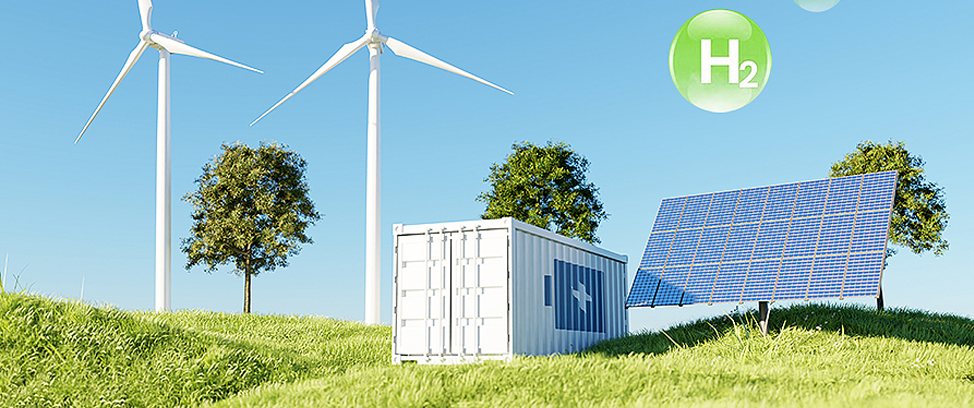
In fluctuating power supply scenarios such as photovoltaic and wind power, hydrogen production power supplies demonstrate unique value:
Sub-second Response Speed: Quickly smooths fluctuations in renewable energy generation, maintaining efficient and stable operation of the electrolyzer.
Supports Off-Grid/Weak Grid Connection: Provides technical support for distributed hydrogen production in remote areas.
Improves the Economics of Green Hydrogen: The North Sea wind power hydrogen production base in Germany uses a 10000A hydrogen production power supply, achieving an annual production capacity of tens of thousands of tons.
Wide Applications in Industrial Fields
From chemical and metallurgical industries to semiconductor manufacturing, hydrogen production power supplies are becoming key equipment for industrial decarbonization. China Baowu Steel's hydrogen-based ironmaking project and various fuel cell hydrogen refueling stations have adopted this advanced technology.