What are the advantages of electroplating rectifiers in electroplating products?

2025.12.08

As the heart of the electroplating production line, the electroplating rectifier converts alternating current (AC) into stable direct current (DC), and its performance directly determines the final quality of the electroplated product. With technological advancements, modern high-frequency switching rectifiers have gradually replaced traditional thyristor equipment, bringing revolutionary improvements to the electroplating industry. The following analyzes the core value of electroplating rectifiers for electroplating products from multiple dimensions.

I. Significantly Improved Coating Quality and Performance
Modern high-frequency rectifiers fundamentally optimize the electroplating crystallization process through precise current control. Specifically:

  1. Refined Grain Size and Denseer Coating
    High-frequency pulsed current causes the crystal nucleus formation rate to exceed the growth rate, promoting crystal nucleus refinement, thereby reducing porosity and obtaining a denser and more uniform coating. The DC superimposed pulse function can further improve the mechanical and physical properties of the coating, increasing density and toughness.
  2. Enhanced Adhesion and Coverage
    Controllable waveform output can penetrate the passivation film, improving the adhesion between the substrate and the coating. The high negative cathode potential allows deposition even in areas difficult to cover with conventional electroplating, avoiding "burnt" or "dendritic" defects. Its coverage capability is particularly outstanding for deep holes and grooves in complex parts.
  3. More Stable Alloy Coating Composition
    Precise current control facilitates the acquisition of alloy coatings with stable composition, which is crucial for functional electroplating (such as nickel alloys and zinc alloys).

II. Superior Energy Saving and Consumption Reduction Effects
High-frequency switching rectifiers achieve conversion efficiencies exceeding 90%, saving more than 10% energy compared to traditional thyristor equipment under normal conditions; when the load rate is below 70%, the energy saving effect can reach over 30%. This is due to its use of high-frequency transformers and soft-switching technology, which significantly reduces power losses. For large-scale electroplating enterprises, annual electricity cost savings can reach hundreds of thousands of yuan, while reducing carbon emissions and meeting green production requirements.

III. Output Stability and Accuracy Advantages
Modern rectifier systems have microsecond-level response speeds, exhibiting strong adaptability to grid fluctuations and load changes, with output accuracy better than 1%. This high stability ensures:

  • Uniformity of plating thickness: Avoids uneven thickness caused by current fluctuations
  • Process repeatability: Highly consistent quality within the same batch of products
  • Guaranteed high-quality plating: High-precision output is a prerequisite for obtaining crack-free and pore-free plating

IV. Compact size, convenient installation and maintenance
The volume and weight of the high-frequency rectifier are only 1/5 to 1/10 of that of the silicon controlled rectifier, bringing multiple benefits:

  • Flexible layout: Facilitates production line planning, expansion, and relocation
  • Convenient maintenance: Modular design reduces maintenance difficulty and time costs
  • Space saving: Significantly reduces equipment footprint for the same production capacity

V. Intelligent and automated functions
The new generation of digital adjustable rectifiers adopts digital technology and has precise programmable control capabilities. This is mainly reflected in:

  • Multi-segment operation mode
    Complex processes such as reverse electrolysis, high current impact, and stepped power supply can be preset to achieve fully automatic sequential adjustment. For example, the three-segment operation of hard chrome plating can be precisely set within 0-255 seconds for each segment.
  • Remote Monitoring and Data Management
    Connecting to a computer via a PLC interface supports remote monitoring, parameter recording, and process traceability, significantly improving production management efficiency. When multiple rectifiers are connected in parallel, automatic load balancing and fault redundancy can be achieved, ensuring production continuity.

VI. Waveform Adjustability and Process Adaptability
The high-frequency rectifier can flexibly output DC, pulse, square wave, and superimposed waveforms to meet different process requirements:
Pulse Electroplating: Positive and negative pulse frequencies and duty cycles can be independently adjusted, allowing for the creation of plating layers with different physical properties when combined with hard chrome plating.
Special Waveforms: For high-requirement scenarios such as PCB electroplating and precious metal electroplating, customized waveforms can be used to improve deep plating capabilities and dispersion.

VII. Environmental Protection and Safety Performance
The intelligent rectifier is equipped with comprehensive protection mechanisms, including overvoltage, undervoltage, overheat, and overcurrent protection, effectively preventing batch quality problems or safety accidents caused by equipment failure. Energy-saving characteristics directly reduce energy consumption and heat emissions, improving the workshop working environment. Simultaneously, precise current control reduces additive consumption and heavy metal ion waste, lowering wastewater treatment pressure.

VIII. Comprehensive Economic Benefits
Using high-performance rectifiers brings comprehensive economic value:
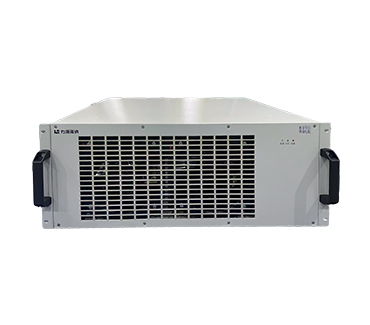
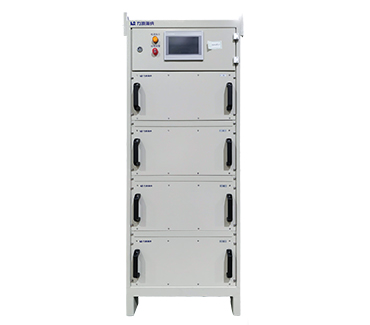
  • Raw Material Savings: Superior coverage reduces the plating thickness required to achieve the same performance by 1/3 to 1/2.
  • Reduced Rework Rate: Stable quality reduces defective products and re-plating costs.
  • Increased Capacity: Rapid response and automation shorten process time.
  • Longer Equipment Lifespan: Soft-switching technology reduces power transistor stress and extends equipment lifespan.
  • Conclusion: Electroplating rectifiers have evolved from simple "power supply equipment" to "quality controllers." The combination of high-frequency switching technology, digital control, and pulse processes gives modern rectifiers irreplaceable advantages in improving plating quality, saving energy, reducing consumption, and enabling intelligent production. For electroplating companies pursuing superior quality, choosing high-performance rectifiers is not only an equipment upgrade but also a core investment in product quality and corporate competitiveness.

Back to Top

Chat Now

Whatsapp

Email

Inquiry